We Use CookiesWe use cookies to enhance the security, performance, functionality and for analytical and promotional activities. By continuing to browse this site you are agreeing to our privacy policy

10 Best Thermal Cameras 2026 in the United States
How do we rank products for you?

Our technology thoroughly searches through the online shopping world, reviewing hundreds of sites. We then process and analyze this information, updating in real-time to bring you the latest top-rated products. This way, you always get the best and most current options available.

headphones-stars

Our Top Picks

#1

Winner

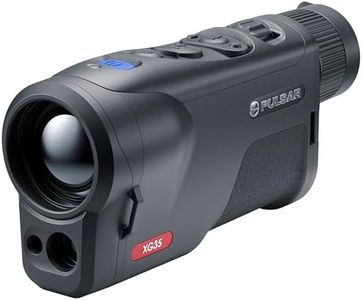
Pulsar Oryx LRF XG35 Thermal Monocular with Laser Range Finder, 640x480 12 µm Sensor, 2.5-20x Magnification, Long Range Monocular for Hunting

The Pulsar Oryx LRF XG35 thermal monocular is a strong choice for hunters and outdoor enthusiasts who need clear thermal imaging in challenging conditions like fog or dense foliage. It uses a 640x480 sensor with a fine 12 µm pixel size, which helps deliver sharp and detailed images on its bright AMOLED 1024x768 display. The 12.5° field of view strikes a balance between detail and situational awareness, while 2.5-20x magnification allows you to zoom in on targets at various distances.

A standout feature is its built-in laser rangefinder providing precise distance measurements up to 1500 meters, which is especially useful for hunting or navigation. Detection range near 1969 yards supports spotting targets from afar. The 35mm lens contributes to good light gathering, improving image clarity. This monocular is built for rugged use and offers portability, though extra care may be needed in extreme weather conditions. The device includes USB-C connectivity and comes with accessories like a power adapter and batteries.

The image quality and laser rangefinder integration make it versatile for day and night use. If you want a reliable, high-resolution thermal monocular with strong magnification and precise rangefinding for hunting or outdoor observation, the Pulsar Oryx LRF XG35 is a compelling option, though confirming its durability against harsh conditions before heavy field use is advisable.

#2

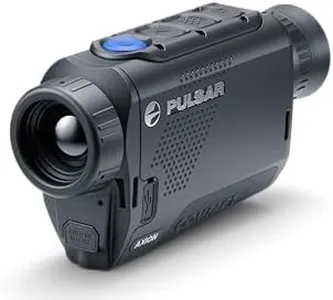
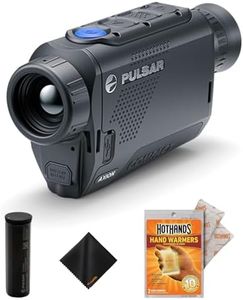
Pulsar Axion XQ19 Compact Thermal Monocular, 384x288 17 µm Sensor, 1.5-6x Magnification, Thermal Scope for Hunting

The Pulsar Axion XQ19 is a compact thermal monocular designed primarily for hunting and outdoor tracking. It features a 384x288 resolution sensor with excellent thermal sensitivity (<18 mK NETD), allowing it to detect small temperature differences effectively. This capability makes it reliable in challenging conditions like fog, rain, or thick brush, helping hunters spot animals by their heat signature even from a distance. The 19.5-degree field of view is wide enough for scanning terrain, while the 1.5 to 6x digital zoom offers flexibility to focus on details when needed.

Its 640x400 AMOLED display enhances image clarity with vivid contrast and deep blacks, improving visibility in low light situations such as dusk or dense foliage. The monocular’s 19mm lens and fast aperture (f/1.0) also contribute to bright, sharp images at mid-range distances. The unit runs on a single 9V battery, which is convenient but may limit continuous use time compared to rechargeable options. Weighing under 9 ounces, it’s lightweight and easy to carry, suitable for quick spotting or longer excursions.

If you’re seeking a solid, user-friendly thermal monocular for hunting that offers sharp imaging and good sensitivity without breaking the bank, the Axion XQ19 is a worthy consideration.

#3

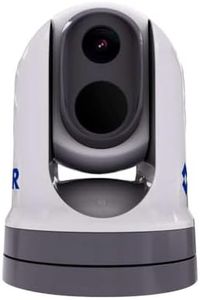
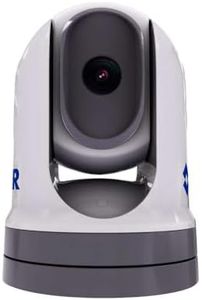
FLIR M364C Thermal/Low-Light Camera, Stab.

The FLIR M364C Thermal/Low-Light Camera is designed to combine thermal imaging with low-light video capabilities, providing clear visibility in dark or challenging environments. FLIR is known for producing quality thermal sensors, so users can expect decent image clarity for detecting heat differences. The camera is portable and supports Bluetooth connectivity, facilitating easy integration with other devices for data transfer or remote viewing.

This model appears to be mainly intended for indoor use, which might limit its application in harsher outdoor conditions. Weighing around 19 pounds, it is relatively heavy for a handheld device, making it more suitable for installation or use with mounting equipment rather than casual carry.

Its modest size and classification in the thermal imagers category make it a practical choice for security, inspection, or monitoring in controlled settings, though it may not meet the demands of more rugged or wide-area thermal imaging tasks.

Buying Guide for the Best Thermal Cameras

Choosing the right thermal camera requires understanding how these devices detect heat rather than visible light, making them useful for tasks like home inspections, electrical troubleshooting, wildlife observation, and security work. The best fit for you will depend on what level of detail you need, how you'll use the camera, and the working conditions. Familiarizing yourself with the main features will help you confidently select a camera that meets your needs, whether you’re a homeowner, DIY enthusiast, or professional.
ResolutionResolution in a thermal camera refers to the number of pixels that form the thermal image, commonly written as width x height (like 160x120). Higher resolution gives you more detail, which is crucial if you need to spot small temperature differences or objects from a distance. Lower resolutions (like 80x60) are fine for simple tasks like quick checks or locating general hotspots, while mid-range (like 160x120 or 320x240) balance cost and detail for routine inspections. Go for high resolution (640x480 or above) if you need sharp images or want to analyze small, distant, or complex targets. Think about the level of detail your tasks require: for checking large or simple targets up close, lower resolution is fine; for detailed inspections or analysis at a distance, prioritize higher resolutions.
Thermal Sensitivity (NETD)Thermal sensitivity, often shown as NETD (Noise Equivalent Temperature Difference), measures how small a temperature difference the camera can detect—expressed in millikelvins (mK). Lower NETD values mean the camera can distinguish tinier differences in temperature, making it better for spotting subtle issues, like slight insulation leaks or minor electrical faults. NETD above 100mK is suitable for routine work where only big temperature differences matter, 70–100mK is good for general use, and below 70mK is best for fine inspection or research. Think about your application: if you need to spot fine variations, choose a camera with low NETD; if just finding big hotspots is enough, higher NETD is acceptable.
Temperature RangeThe temperature range tells you the minimum and maximum temperatures the camera can measure. A wider range is necessary for environments with extreme heat or cold, or for industrial inspections involving hot equipment. Narrower ranges are enough for home use, like checking walls or HVAC systems. Typical ranges might start at –20°C and go up to 250°C for general models, while specialized ones may go far beyond. To choose right, think about the hottest and coldest surfaces you’ll examine. Pick a camera that easily covers the extremes in your expected tasks.
Field of View (FOV)Field of View (FOV) is the angle that the thermal camera lens covers—essentially, how wide a scene the camera can capture in one image. A narrow field of view lets you see farther away, useful for inspecting distant objects; a wide field of view captures more area up close, ideal for scanning walls or large equipment. You might find FOV labeled as degrees (like 35° or 50°). For close-up, broad surveys, a wide FOV is best; for precise, distant inspections, look for a narrower FOV. Think about whether you'll use the camera in tight spaces or for long-distance monitoring and choose accordingly.
Image Fusion and OverlayImage fusion or overlay is when the thermal camera combines the heat image with a regular photographic image. This helps you pinpoint issues by showing the exact location of a thermal problem in context with real-world features. Some models offer simple side-by-side images, while others blend the images for easier interpretation. If you're a beginner or use the camera in complex environments, this feature can save a lot of guesswork. For straightforward tasks in simple settings, you may not need it, but for identifying exact problem spots in detailed environments, it's highly helpful.
Durability and Protection RatingDurability, often shown by an IP (Ingress Protection) rating, tells you how well the camera stands up to dust, water, and rough handling. Higher numbers mean better protection, like IP54 or IP67 for demanding work. For tough environments, construction sites, or outdoor use, higher protection is important; for home or office work, standard ratings are usually enough. Think about where you’ll use the camera and how much rough treatment it might face, then pick accordingly.
Display Type and SizeThe display is where you view the thermal images. Bigger, brighter, and higher-resolution screens make it easier to see detail, especially in bright sunlight or dark spaces. Touchscreens add convenience for menus and focus. A basic display might be fine for quick looks, but regular or professional use benefits from larger, clearer screens. Think about where and how often you'll review images—choose a display that makes your work comfortable and effective.
Connectivity and StorageThis covers how the camera saves images (SD card, internal memory, etc.), and how you get them onto other devices (USB, Wi-Fi, Bluetooth). For simple logbooks or shared reports, Wi-Fi or Bluetooth makes sending images easy; USB is reliable for transferring lots of data. Check how many images you can save and whether you need to connect quickly with phones, tablets, or computers. Pick based on whether you’ll need to share or back up images regularly.

FAQ

Most Popular Categories Right Now