We Use CookiesWe use cookies to enhance the security, performance, functionality and for analytical and promotional activities. By continuing to browse this site you are agreeing to our privacy policy

10 Best Lithium Battery For Kayak 2026 in the United States
How do we rank products for you?

Our technology thoroughly searches through the online shopping world, reviewing hundreds of sites. We then process and analyze this information, updating in real-time to bring you the latest top-rated products. This way, you always get the best and most current options available.

headphones-stars

Our Top Picks

#1

Winner

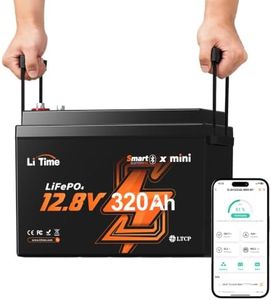
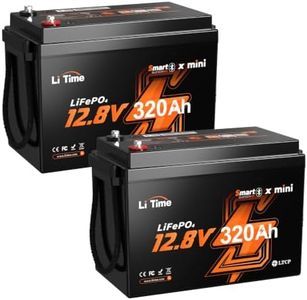
LiTime12.8V 320Ah Mini LiFePO4 Battery, 4000+ Deep Cycles Bluetooth Lithium Battery, IP65 Waterproof, Backup Power for RV, Travel Trailer, Trolling Motor

Rating
10.0
Chosen by1,153
Cycle Life
Capacity (Ah)

Most important from
275 reviews

Cycle Life
Delivers flawless performance even after a year and a half of heavy use in off-grid conditions.
Capacity (Ah)
Maintains charge exceptionally well during extended off-grid trips without any power loss.

The LiTime 12.8V 320Ah Mini LiFePO4 battery is a strong choice for users needing a compact yet powerful lithium battery for kayaks, small boats, or RVs. Its capacity of 320Ah offers ample energy storage, surpassing many standard 300Ah 12V batteries, while being about one-third smaller in size. This makes it ideal for tight spaces where fitting a bulky battery is challenging. Weighing around 57 pounds, it’s lighter than traditional lead-acid batteries of similar capacity, which helps with easier installation and handling.

This battery holds over 4000 deep cycles, giving it a long life that suits frequent use on water or outdoor trips. It’s designed to handle tough conditions, featuring an IP65 rating that protects against water spray and dust, which is essential for marine environments. It also includes cold-weather protection down to -20℃, ensuring consistent performance even in cold climates.

One modern perk is the built-in Bluetooth 5.0, allowing users to monitor battery status like voltage and charge level via a smartphone app without extra hardware. This can help avoid unexpected power loss during trips and adds convenience. The battery excels in providing high capacity, durability, and smart monitoring in a compact waterproof package, making it particularly beneficial for kayakers or boaters who need reliable power without compromising space. Its weight might be a consideration depending on the size of the vessel.

Rating
10.0
Chosen by1,153
Cycle Life
Capacity (Ah)

Most important from
275 reviews

Cycle Life
Delivers flawless performance even after a year and a half of heavy use in off-grid conditions.
Capacity (Ah)
Maintains charge exceptionally well during extended off-grid trips without any power loss.
#2

100Ah 12V Lithium-Ion (LiFePO4) RV, Marine, Solar, & Off Grid Battery - Internal BMS, High & Low Temperature Protection - Battle Born Batteries

Rating
8.8
Capacity (Ah)
Weight

Most important from
870 reviews

Capacity (Ah)
Despite the higher upfront cost, the long lifespan and the ability to use nearly 100% of the battery capacity make it a cost-effective choice in the long run.
Weight
The lightweight and durable design ensures that it can handle the rigors of off-grid and marine environments.

The Battle Born 100Ah 12V Lithium-Ion Battery stands out primarily due to its impressive capacity and versatility, making it a great choice for kayak enthusiasts looking for a reliable power source. With a 100Ah capacity, it offers substantial power, ensuring long-lasting performance on the water. Its 12V voltage is standard for most kayak needs, providing compatibility with various electrical systems. Weighing only 31 pounds, it is quite lightweight for its size, which is beneficial for maintaining the balance and maneuverability of a kayak without adding unnecessary weight.

In terms of durability, this battery boasts a considerable cycle life, with 3,000-5,000 deep discharge cycles, promising a lifespan of up to 10-15 years. This makes it a cost-effective investment, as it requires less frequent replacements compared to traditional lead-acid batteries. Its internal Battery Management System (BMS) adds an extra layer of safety, offering protection against low temperatures, high and low voltage, and short circuits, crucial for outdoor and marine environments.

The battery's design as a drop-in replacement for Group 27 and 31 batteries adds convenience, and its ability to be wired in series or parallel gives users flexibility in customizing their power setup. However, while the battery is described as rugged and suitable for marine use, the specific details regarding its water resistance are not explicitly mentioned, which might be a consideration for users expecting heavy water exposure. If safety, longevity, and power efficiency are priorities, especially for those using multiple electronic devices on their kayak, this battery offers significant advantages. Potential buyers should ensure their specific water resistance needs are met either by this battery or through additional protective measures.

Rating
8.8
Capacity (Ah)
Weight

Most important from
870 reviews

Capacity (Ah)
Despite the higher upfront cost, the long lifespan and the ability to use nearly 100% of the battery capacity make it a cost-effective choice in the long run.
Weight
The lightweight and durable design ensures that it can handle the rigors of off-grid and marine environments.
#3

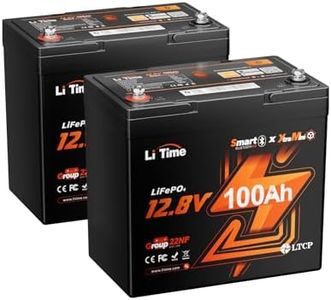
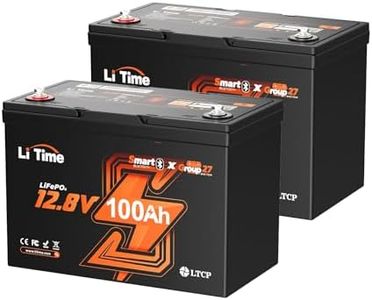
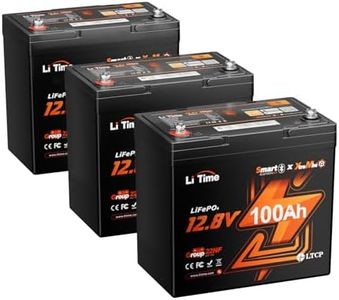
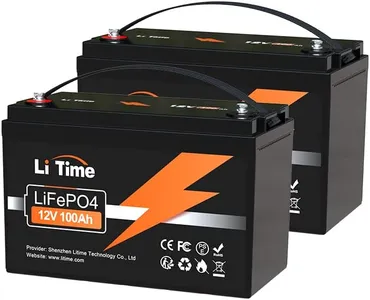
LiTime 12V 100Ah Xtra-Mini Bluetooth Trolling Motor LiFePO4 Battery, 12 Volt MINI Small Lithium Batteries, Up to 15000 Deep Cycle, 100A BMS for RV, Camper, Travel Trailers, Boat, Yacht, Kayak (2-Pack)

Rating
8.5
Weight
Size and Form Factor
Charging Time

Most important from
444 reviews

Weight
This battery’s lightweight design and compact size make it easy to fit perfectly into tight spaces on small boats, significantly reducing carry weight compared to traditional AGM batteries.
Size and Form Factor
This battery’s lightweight design and compact size make it easy to fit perfectly into tight spaces on small boats, significantly reducing carry weight compared to traditional AGM batteries.
Charging Time
Fast charging capability is a game changer, allowing full recharge in about an hour, which is ideal for multiple fishing sessions or day trips without long downtime.
Cycle Life
With a long lifespan and over 4000 deep charge cycles, this battery represents a smart long-term investment for frequent kayakers and small boat users seeking durability and consistent performance.

The LiTime 12V 100Ah Xtra-Mini LiFePO4 battery is a compact and lightweight lithium battery well suited for kayakers who need reliable, high-capacity power without bulky equipment. Offering 100 amp-hours at 12 volts, it delivers ample energy (around 1280Wh) to run trolling motors or other small devices on the water. Its small size (about 9 x 5.5 x 8 inches) and relatively light weight (about 19 pounds per battery) make it easy to carry and fit in tight spaces typical on kayaks or small boats.

With a strong cycle life of over 4000 deep charges and a lifespan exceeding 10 years, this battery can be a long-term investment for frequent paddlers. It also supports fast charging—recharging fully in about an hour—which is convenient for day trips or multi-day adventures. The built-in Bluetooth lets you monitor battery status in real time through an app, helping prevent surprises while out on the water. The battery includes more than 20 safety protections, such as temperature cut-offs and moisture resistance, making it durable and well-prepared for outdoor, wet environments typically encountered while kayaking. It is important to note this battery is not designed for starting engines or golf carts, so it’s best suited for powering trolling motors and electronics rather than heavy starting loads.

One drawback is the weight: while lighter than many lead-acid alternatives, 19 pounds per battery still requires some effort to transport if carrying multiple units. Also, the need to buy two batteries for some setups increases the overall cost and transport complexity. Shipping might arrive in multiple packages, which could be inconvenient. This LiTime battery is a smart choice for kayakers seeking a compact, durable, and powerful lithium battery that supports long usage cycles and quick recharge, fitting well within the demands of paddle sports and small boating.

Rating
8.5
Weight
Size and Form Factor
Charging Time

Most important from
444 reviews

Weight
This battery’s lightweight design and compact size make it easy to fit perfectly into tight spaces on small boats, significantly reducing carry weight compared to traditional AGM batteries.
Size and Form Factor
This battery’s lightweight design and compact size make it easy to fit perfectly into tight spaces on small boats, significantly reducing carry weight compared to traditional AGM batteries.
Charging Time
Fast charging capability is a game changer, allowing full recharge in about an hour, which is ideal for multiple fishing sessions or day trips without long downtime.
Cycle Life
With a long lifespan and over 4000 deep charge cycles, this battery represents a smart long-term investment for frequent kayakers and small boat users seeking durability and consistent performance.

Buying Guide for the Best Lithium Battery For Kayak

Choosing the right lithium battery for your kayak is crucial for ensuring a reliable and enjoyable experience on the water. Lithium batteries are known for their lightweight, long lifespan, and high energy density, making them an excellent choice for powering your kayak's electronics, trolling motor, or other accessories. To make an informed decision, you need to understand the key specifications and how they relate to your specific needs and usage patterns.
Capacity (Ah)Capacity, measured in ampere-hours (Ah), indicates how much energy the battery can store. This is important because it determines how long the battery can power your devices before needing a recharge. Batteries with higher capacity (e.g., 50Ah or more) are suitable for longer trips or for powering multiple devices, while lower capacity batteries (e.g., 20Ah) are sufficient for shorter outings or minimal power needs. Consider your typical usage duration and power requirements to choose the right capacity for your kayak.
Voltage (V)Voltage, measured in volts (V), is the electrical potential of the battery. Most kayak electronics and trolling motors operate on 12V systems, so a 12V lithium battery is usually the standard choice. However, some setups may require 24V or 36V batteries for higher power needs. Ensure that the battery voltage matches the requirements of your equipment to avoid compatibility issues and ensure optimal performance.
WeightWeight is a critical factor for kayaks, as it affects the overall balance and maneuverability of the vessel. Lithium batteries are generally lighter than traditional lead-acid batteries, but there can still be variations in weight among different lithium models. Lighter batteries (e.g., under 10 pounds) are ideal for maintaining the kayak's performance and ease of handling, especially for smaller or solo kayaks. Consider the weight of the battery in relation to your kayak's capacity and your ability to transport and install it.
Size and Form FactorThe physical dimensions and shape of the battery are important to ensure it fits in the designated space on your kayak. Measure the available space and compare it with the battery's dimensions to ensure a proper fit. Some batteries are designed with compact or modular form factors to fit in tight spaces or to be easily stacked. Choose a battery that fits well within your kayak's storage area without compromising other gear or safety.
Cycle LifeCycle life refers to the number of charge and discharge cycles a battery can undergo before its capacity significantly degrades. This is important for understanding the long-term durability and cost-effectiveness of the battery. Higher cycle life (e.g., 2000 cycles or more) means the battery will last longer and provide better value over time. If you frequently use your kayak, investing in a battery with a high cycle life can be beneficial.
Charging TimeCharging time is the duration it takes to fully recharge the battery. This is important for planning your trips and ensuring you have enough power when needed. Faster charging batteries (e.g., those that charge in 2-4 hours) are convenient for quick turnarounds between outings, while longer charging times (e.g., 6-8 hours) may require more planning. Consider your typical usage patterns and how often you need to recharge to choose a battery with an appropriate charging time.
Water ResistanceWater resistance is a crucial feature for batteries used in kayaks, as they are exposed to wet conditions. Look for batteries with a high IP (Ingress Protection) rating, such as IP67 or higher, which indicates strong protection against water and dust. This ensures the battery can withstand splashes, rain, and brief submersion, providing reliable performance in various water conditions. Choose a battery with adequate water resistance to ensure safety and longevity.

FAQ

Most Popular Categories Right Now