10 Best Hydraulic Presses 2026 in the United States
Related Products
Up to 17% off
Recommended lists

Garlic Presses
Our technology thoroughly searches through the online shopping world, reviewing hundreds of sites. We then process and analyze this information, updating in real-time to bring you the latest top-rated products. This way, you always get the best and most current options available.

Our Top Picks
Winner
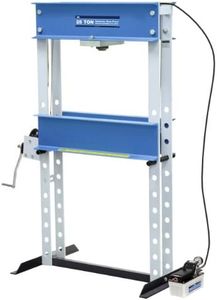
OTC 1834 25-Ton Capacity Shop Press with Air-Driven Hydraulic Pump
The OTC 1834 25-ton hydraulic press is a strong and durable machine well-suited for general shop tasks like pressing bearings and piston pins. Its 25-ton capacity offers enough force for many common automotive and industrial jobs. The press has a large working area (30 x 46 inches) allowing easy positioning of bulky parts, which is a big plus. It features a 6-1/4 inch ram stroke, providing a decent range for pressing operations.
The pneumatic (air-driven) hydraulic pump operated by a foot pedal keeps your hands free, making the work safer and more efficient. Adjusting the press bed height is done manually with a hand crank, which allows one person to set it up without help, though it might be slower than electric or automated systems. The heavy alloy steel construction and powder-coated finish make the press sturdy and durable for long-term use.
One downside is the lack of advanced digital controls or speed adjustment options—this is a straightforward, mechanical press, so if you need precise speed control or automation, this might not be the best fit. Also, at 440 pounds and with fairly large dimensions, it requires a dedicated space in the workshop. The lifetime warranty (excluding abuse) is reassuring for durability. This press is a solid choice for small to medium shops or hobbyists looking for a reliable, no-frills hydraulic press capable of handling a variety of tasks without complicated controls.
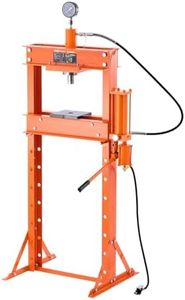
VEVOR Hydraulic Shop Press, 20 T H-Frame Pneumatic Shop Press with Press Plate, Stable Garage Floor Adjustable Hydraulic Press with Triangular Support, Fit for Bending, Straightening & Stamping
Most important from
1457 reviews
The VEVOR Hydraulic Shop Press offers a solid 20-ton capacity, making it powerful enough for many garage tasks like bending, straightening, and stamping metal parts. Its stroke length of 5.5 inches is on the shorter side, so it's best suited for pressing jobs that don't require deep travel. The adjustable worktable lets you change the height across nine settings from about 2.6 to 40.5 inches, which provides good flexibility for different sized projects. The triangular base and H-frame design add stability, helping keep the press steady during use. One standout feature is the pneumatic assist pump, which reduces effort by using an air compressor, making pressing smoother and less tiring especially on tougher jobs.
The press is made of thick alloy steel, ensuring durability and long-term strength. With a weight of about 190 pounds, it requires a stable garage floor but remains portable enough for typical workshop settings. The control system is manual but benefits from the pneumatic boost for easier operation. This press suits hobbyists and professional mechanics who need a dependable, moderately sized hydraulic press for vehicle maintenance and metalwork, though it’s less suited for very large or deep pressing tasks.
Most important from
1457 reviews
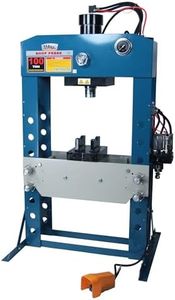
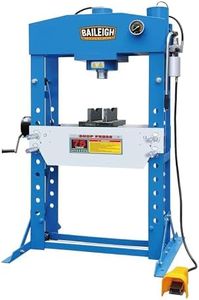
Baileigh 100-Ton Pneumatic H-Frame Shop Press (HSP-100A)
The Baileigh 100-Ton Pneumatic H-Frame Shop Press is a solid choice if you need a powerful press for heavy-duty tasks, offering 100 tons of force that can handle tough pressing jobs. It has a 31-inch working width, which is a decent daylight opening, allowing you to work on a variety of sized parts comfortably. The 11.8-inch stroke length controlled by a foot pedal gives good reach for pressing operations, letting you keep your hands free and improving safety.
A standout feature is its 6.5-inch hydraulic cylinder that can move side to side, making it easier to press parts that aren't perfectly centered—this adds valuable flexibility. Additionally, the hand-operated lever lets you fine-tune the pressing speed for more delicate work where precision matters. The fully welded steel frame is sturdy and reduces flex, so you get more accurate and consistent results. The press comes with V-blocks, which help position round or oddly shaped items securely.
This is quite a heavy and large machine (about 1700 pounds), so it’s best suited for a dedicated workshop space and may not be very portable. This press is well suited for users who need a reliable, industrial-strength machine for general to advanced pressing tasks and appreciate a mix of pneumatic power and manual control.
Buying Guide for the Best Hydraulic Presses
Choosing the right hydraulic press can be a daunting task, but with the right knowledge, you can make an informed decision that best suits your needs. Hydraulic presses are used in various industries for tasks such as forming, molding, punching, and assembling. The key to selecting the right hydraulic press is understanding the specifications that matter most to your specific application. Here are some key specs to consider and how to navigate them.FAQ
Most Popular Categories Right Now


